Bundesregister Nachhaltigkeit
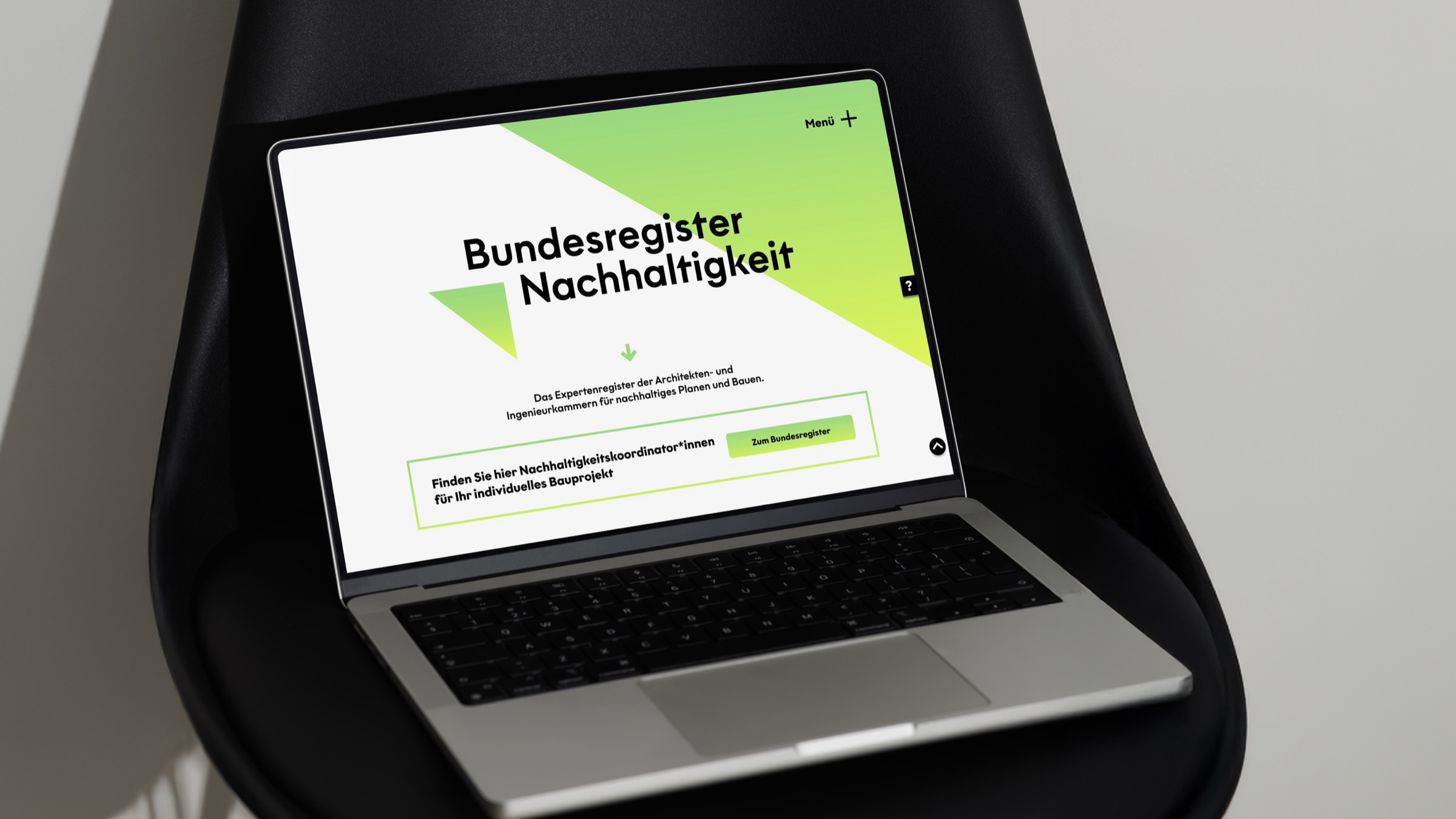
Web design for a nationwide sustainability register
This project was created during my time at 4S Design. It is shown here to document my design contribution. Trademarks, imagery and all further rights of use remain with 4S Design and the respective clients and rights holders.



01Overview
One register, two audiences
The Bundesregister Nachhaltigkeit is an initiative by Germany’s Federal Chamber of Architects and Federal Chamber of Engineers. It makes architects and engineers with proven expertise in sustainability findable nationwide for clients looking for independent advice on their building project.
The problem
The platform has to serve two very different groups: clients want to find the right expert quickly. Chamber members have to go through several steps to get listed, from the membership check to proof via online test or certificate.
The solution
Two clearly separate entry points: a direct search for clients, and a dedicated page for chamber members that breaks the process down into three steps.
02My role
From concept to developer handoff
I developed the website concept, helped develop the two entry points and led the entire web design process, from information hierarchy and page structure through the UI design of all key pages and states to the developer handoff. I was also responsible for the campaign’s animations. The work built on the register’s existing visual identity.
The site is already online but still being built, so it may differ from the designs shown here.
03Website


04UX decisions
What shaped the product
Clients
Search as the main entry point
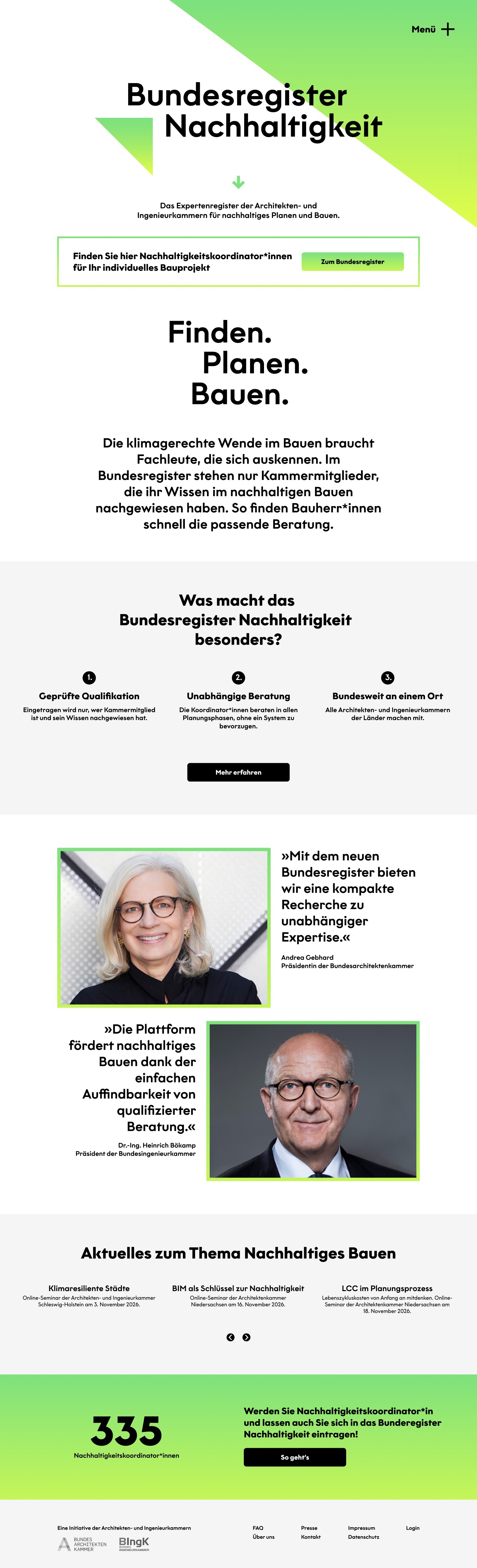
The first box on the home page leads straight to the expert search.
shortest way to the goal, more clients find an expert
Clients
Results you can compare
Consistent cards with fixed details.
easier to choose, more enquiries
Clients
Shortlist without signing in
Saving to a shortlist without an account.
collect without an account, more enquiries for listed experts
Chamber members
The way into the register as a graphic
A graphic shows at a glance who can get listed: two requirements, four ways to provide proof, then activation.
requirements clear up front, fewer queries and more registrations
Both
Trust in a new register
Statements by the chamber presidents and the number of listed experts.
builds trust with clients, motivates more chamber members to register
These decisions are not backed by user testing. They are based on conversations with the client and on informed assumptions about the target groups’ needs.

05Measuring success
Metric · clients
Contact rate
How many clients get in touch after looking at a profile.
Hypothesis Clients find the right expert faster and get in touch more often when consistent profile cards make direct comparison possible.
Metric · chamber members
Completion rate
How many chamber members complete the listing they started.
Hypothesis Chamber members abandon their listing less often when a graphic explains the way into the register at a glance.
Planned, not yet implemented. How I would measure: set a baseline after launch, then compare every change against it.
06What I learned
Bring design and development together early
With an external build, the result is only partly in my hands. I accompanied development through many rounds of review. What I took away: it works best when design and development talk openly about feasibility from the start and plan time for the fine-tuning together.
07Style guide

